
The Craft Behind the Harrods Collection: Cornishware
Words by Emilie Dock
A century since its debut, the Cornishware stripe is as resolute as ever. We visit the family-run Somerset pottery to discover the history of this heritage British brand and see a new Harrods-exclusive range of ceramics taking shape


Finding the perfect mug is a very British pursuit. It needs to feel just right – the handle sitting comfortably around your hand, the lip neither too thin nor too thick, and the weight reassuringly substantial.
Cornishware has been answering that brief for a century. Counted among the 50 most iconic designs of the 20th century by the London Design Museum (alongside the Oxford brogue and the Sony Walkman), the brand’s 10oz mug – featuring the instantly recognisable blue-and-white stripe – is a stalwart of British design.
“The design is [around] 100 years old,” says Rebecca Rickards, head of creative and marketing at Cornishware. “The fact that we haven’t altered it shows just how good it is.”
Alongside a jug, jar, egg cup and espresso cup, plus plates and bowls, that design now features in a new Harrods dinnerware collection, reimagined in – you guessed it – Harrods green.
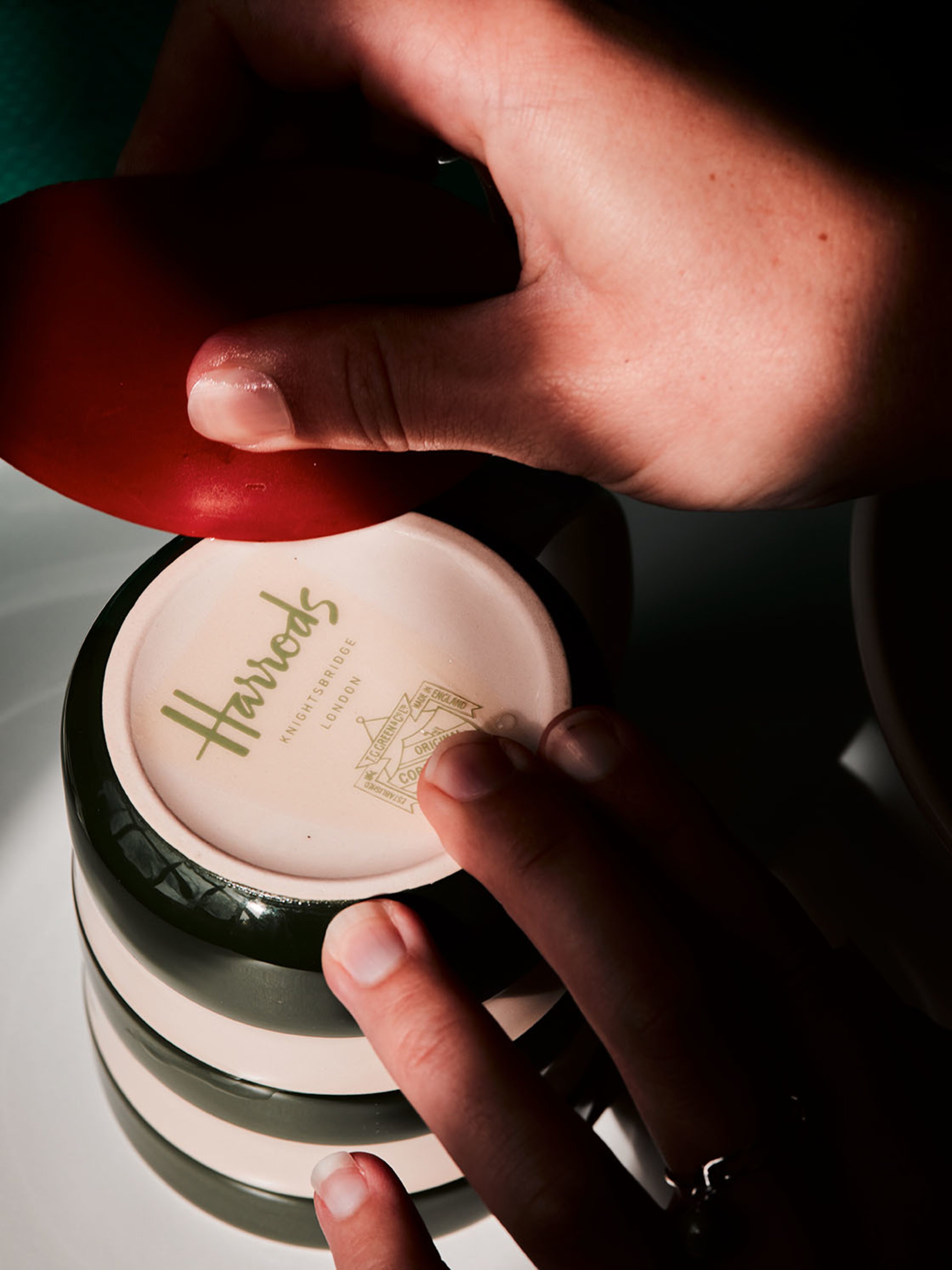
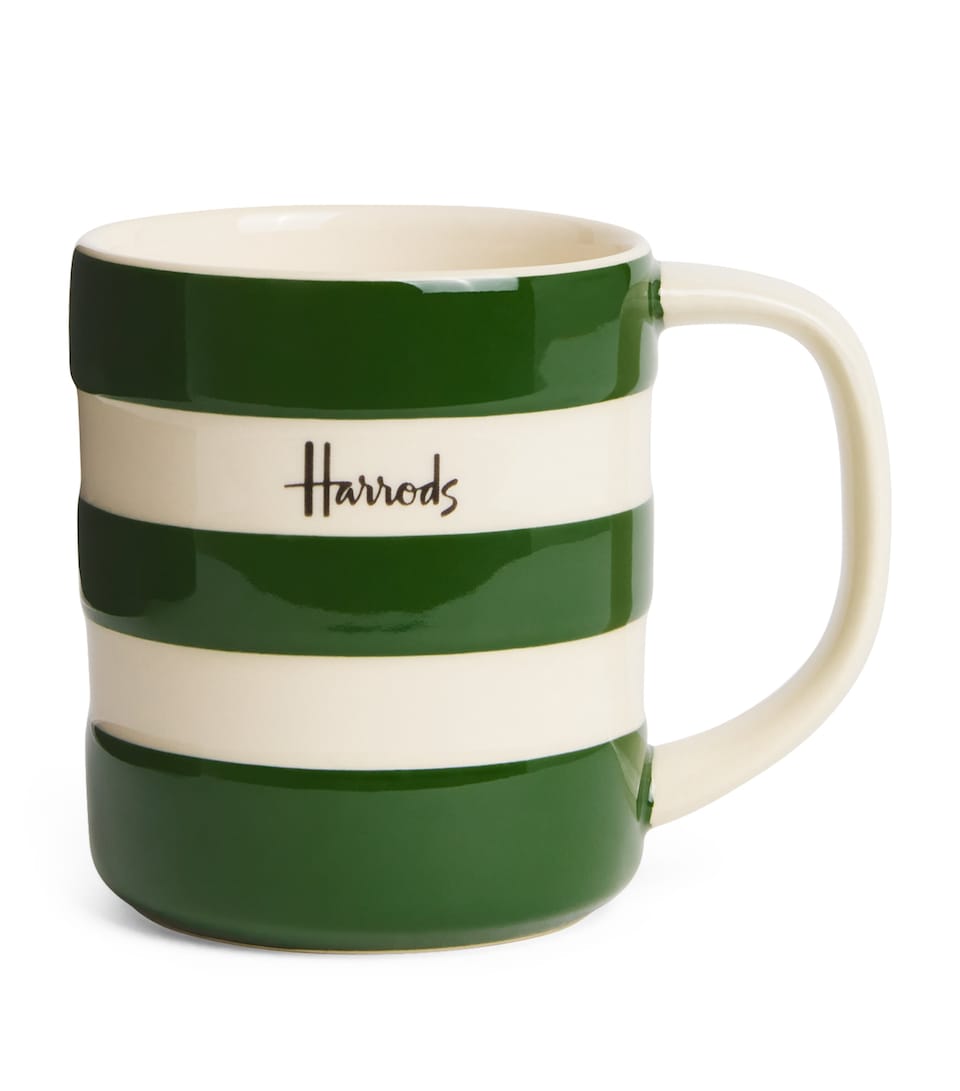
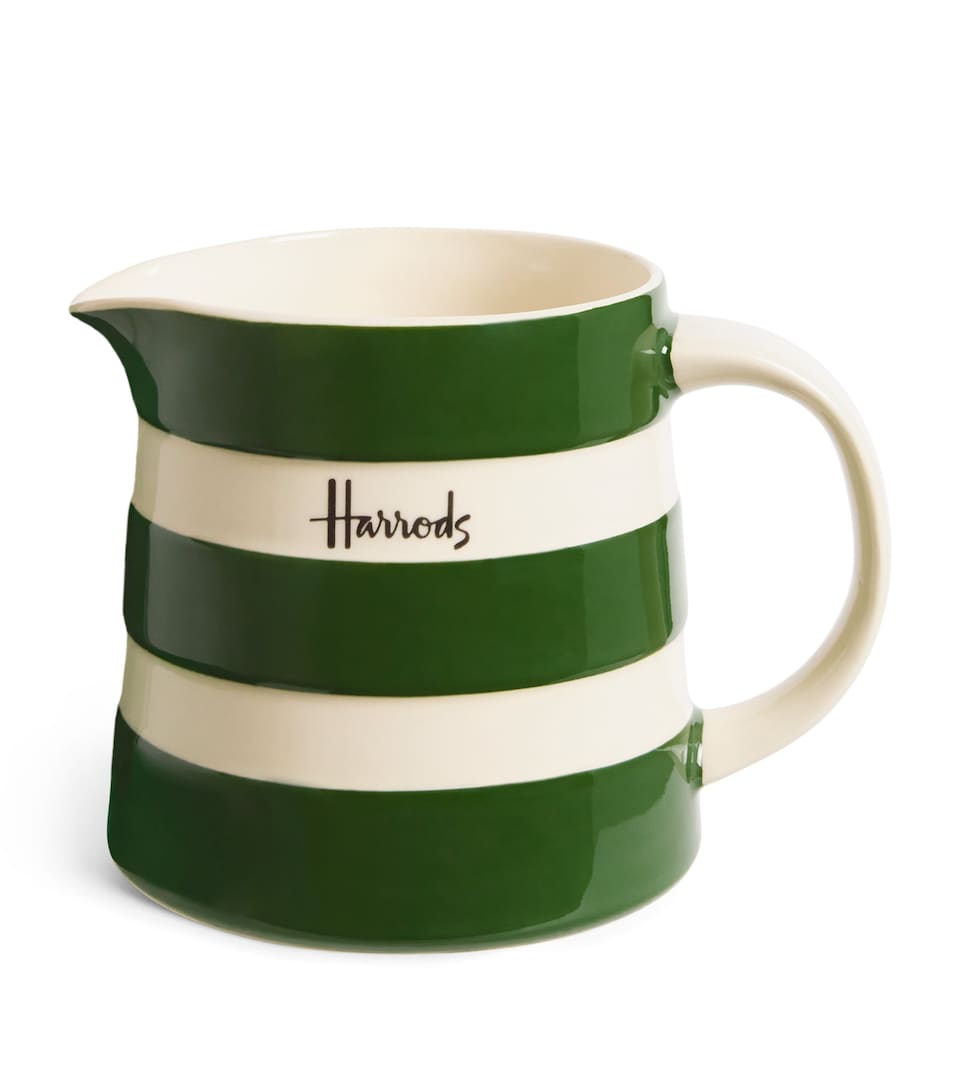
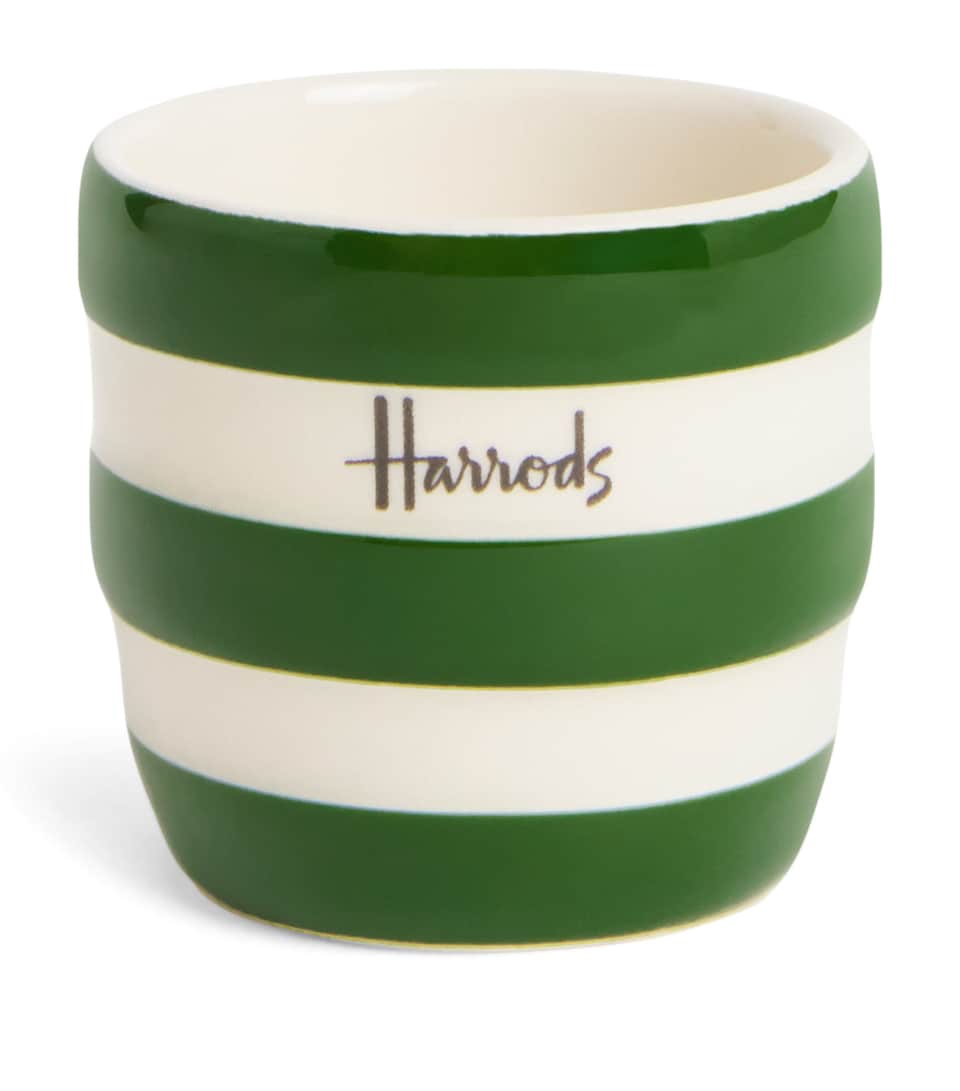
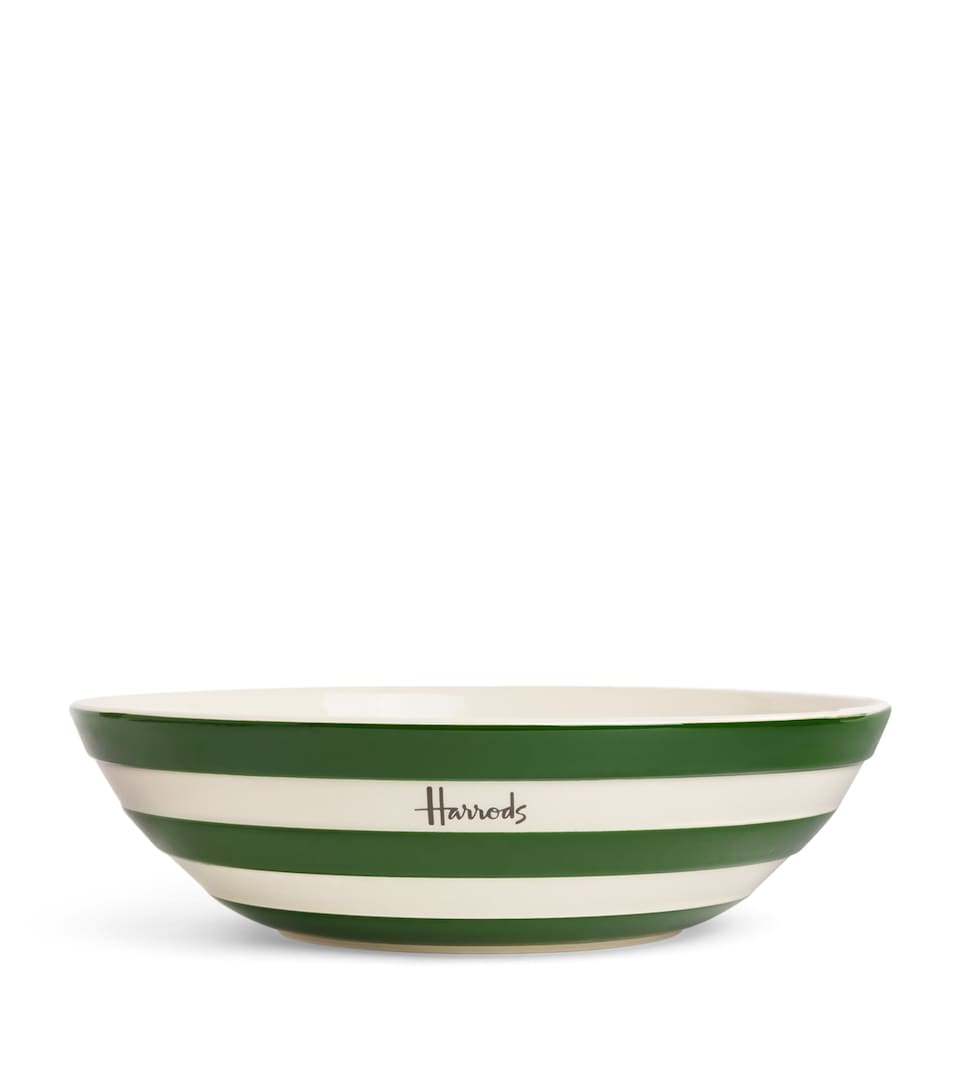
“[The mug is] the most popular piece, with 300 units sold [at Harrods] each week,” Rebecca says. That said, she also reveals, with understandable excitement, that someone has just placed an order for 15,000 espresso cups. The quest for the perfect coffee-appreciation vessel is clearly complete.
Aside from the colour – a deep glossy green that, rather serendipitously, already existed in the potter’s paintbox – and the careful addition of the Harrods logo, the crockery is vintage Cornishware: hand-crafted, premium quality and defined by the iconic stripe.
The Origins of the Cornishware Stripe
It’s difficult to precisely pin down the origins of the design. But the story goes that one Frederick Parker, who in 1919 joined the creative team at T.G. Green pottery – founded in 1864 and rebranded as Cornishware in 2008 – dreamed it up on a company trip to Cornwall just a few years after arriving at the company. “He was sitting on the beach one day and apparently got inspired by the Cornish skies, which are [rarely just] sky blue, but dotted with clouds,” explains Charles Rickards, managing director (and Rebecca’s father). The fashion at the time favoured chintz and dainty florals, so this bold, horizontal blue-and-white line felt rather radical.
It has certainly stood the test of time. Cornishware is one of those British brands with a nostalgic omnipresence. Many customers have a personal connection to the brand, remembering pieces from their childhood, with some passed down through generations.
Counted among them is fashion designer Jonathan Anderson, who, for his Spring/Summer 2024 JW Anderson show at Milan Fashion Week, referenced Cornishware in a bold and wonderful way. More than 500 teapots, mugs and bowls, emblazoned with the designer’s moniker, were sent as invitations to the runway show – which itself played out on a blue-and-white-striped carpet. A giant Cornishware teapot was displayed in the city’s JW Anderson store and, naturally, the stripe featured prominently in the season’s collection.
Crafted by Hand in the UK
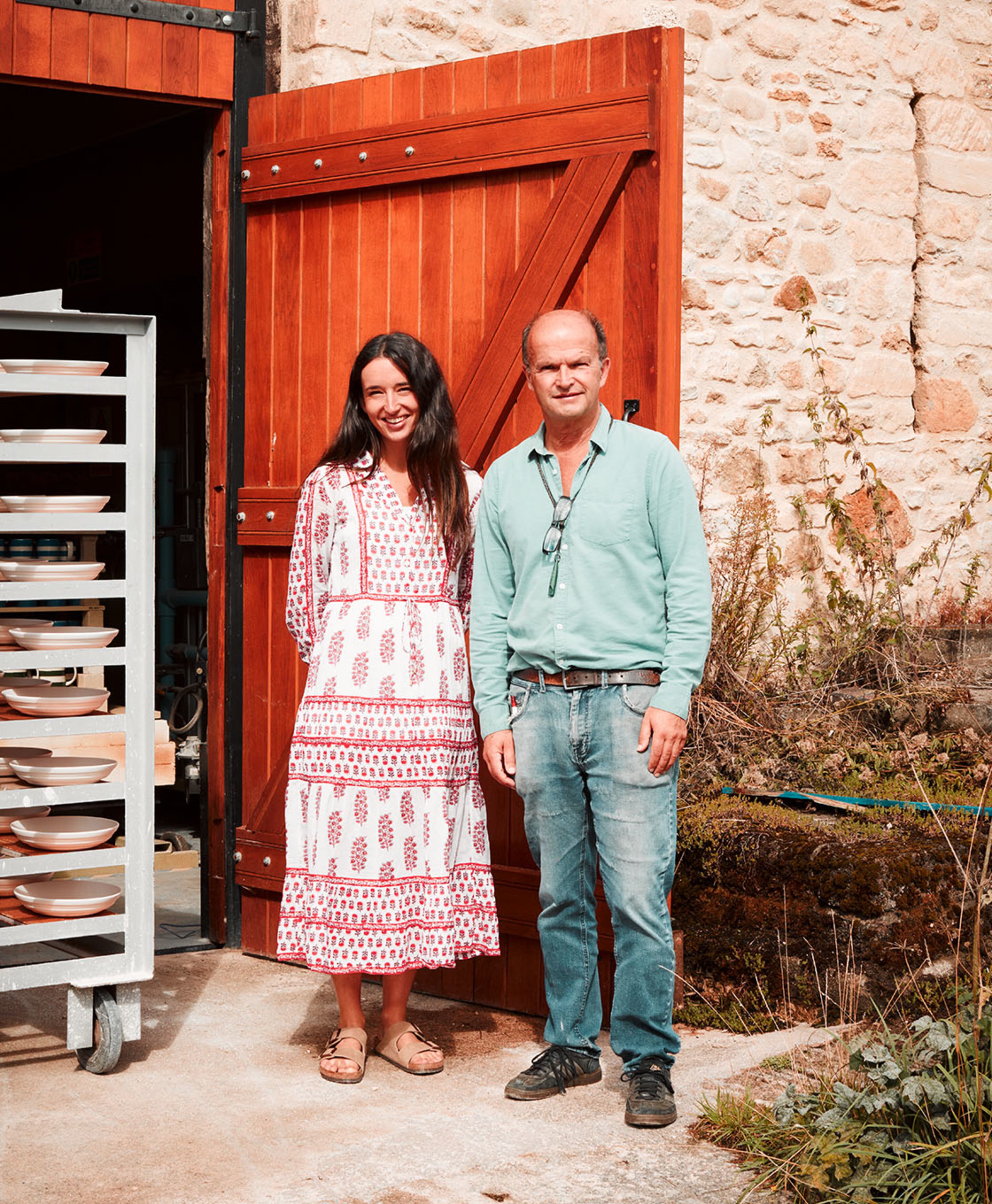
The Harrods collaboration no doubt put a spring in Cornishware’s step. Two years ago, the Rickards duo successfully completed a repatriation process, moving the entire manufacturing process back to the UK, having temporarily (and reluctantly) moved parts of it abroad for a few years while they searched for a British manufacturing partner.

Today, they are proud to produce everything in the UK, with 70 employees – many of them highly skilled craftspeople – split across the pottery in Somerset and another location in Stoke-on-Trent.
“As automation grabs the world, there aren’t that many crafting jobs left now,” remarks Charles. “We’re taking a different approach and embracing how things were done in the past – and the quality it produced.”
The Process: from Clay to Cup
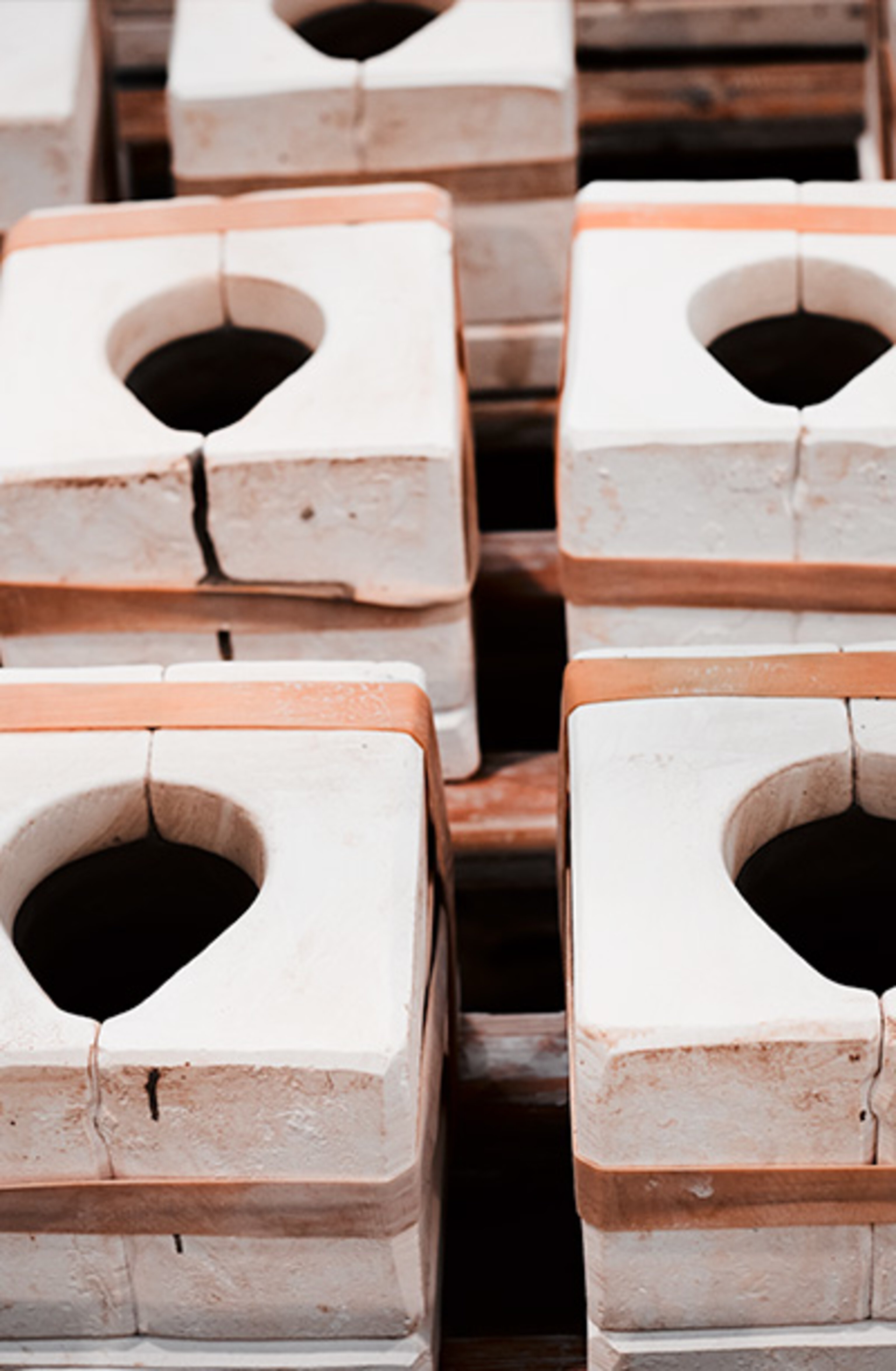
Moulding
Sourced from Cornwall’s coastal town of St Austell, the clay is liquefied and poured into moulds.
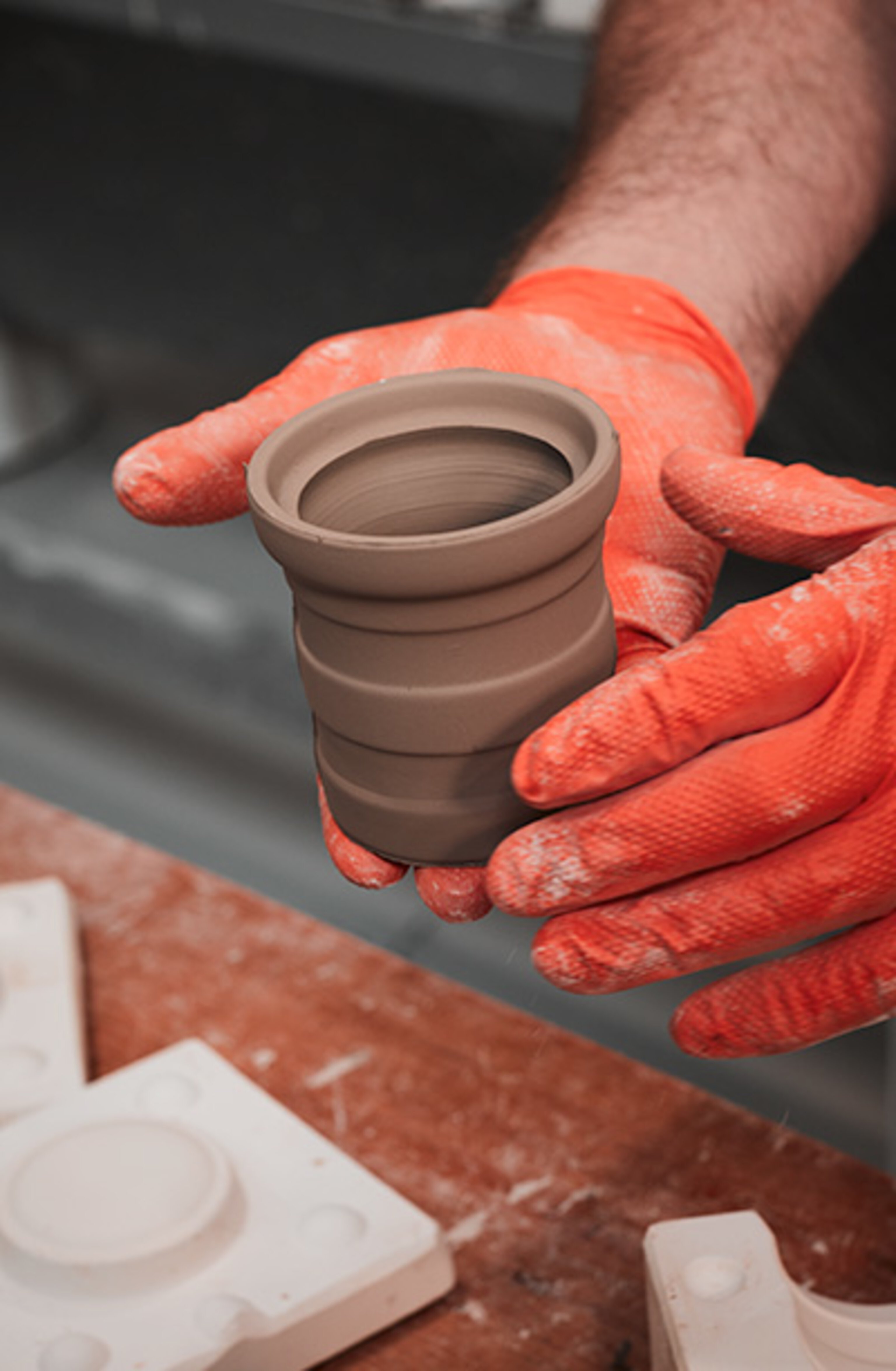
Sponging & Fettling
Removed from the moulds, the pieces are cleaned off using sponges and fettled to remove rough edges.

Drying
Air-drying ensures the clay doesn’t break or crack in the kiln.
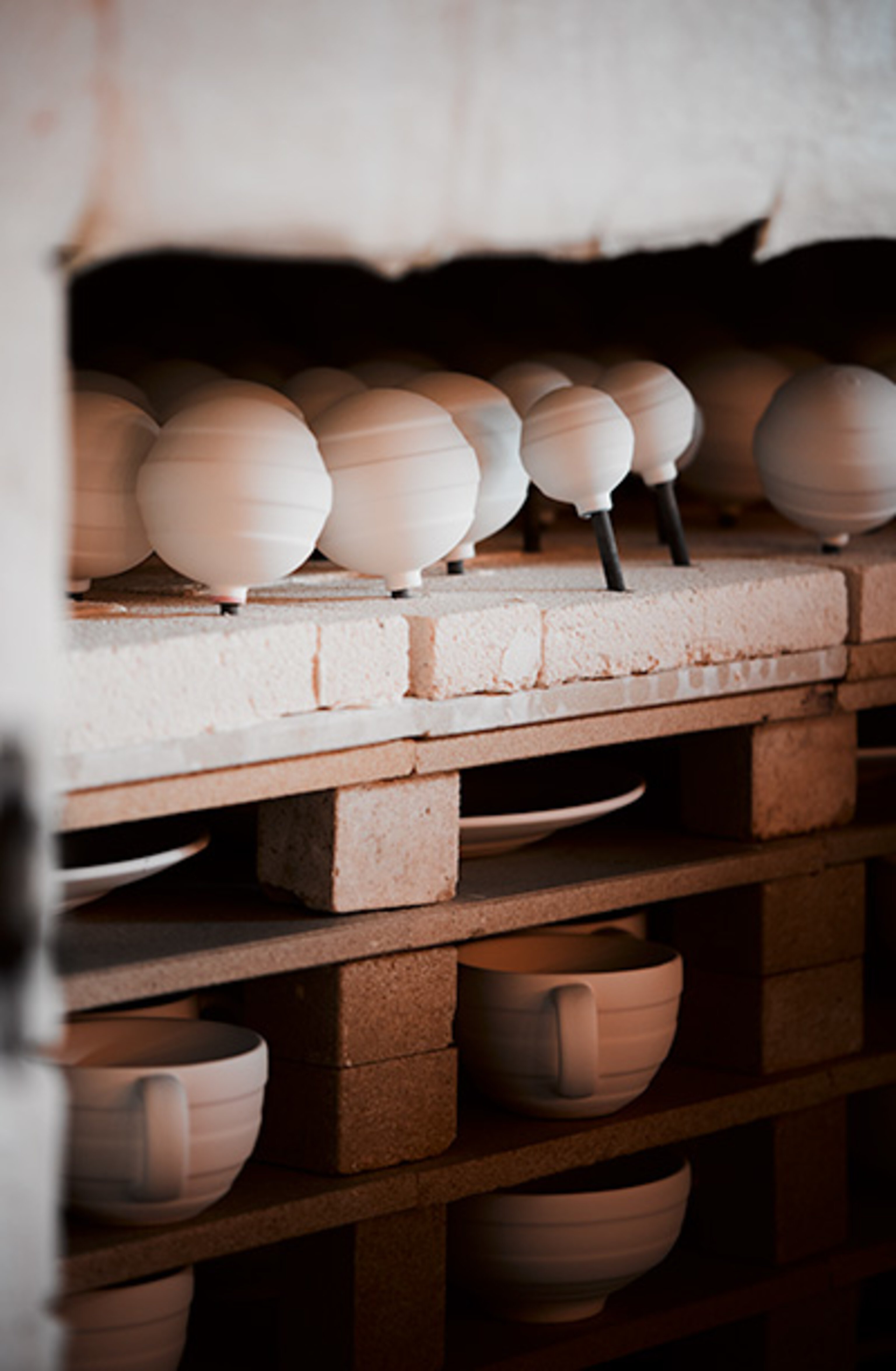
First Firing
The first firing, also known as the ‘biscuit firing’, makes the pieces waterproof, strong and absorbent for glazing.
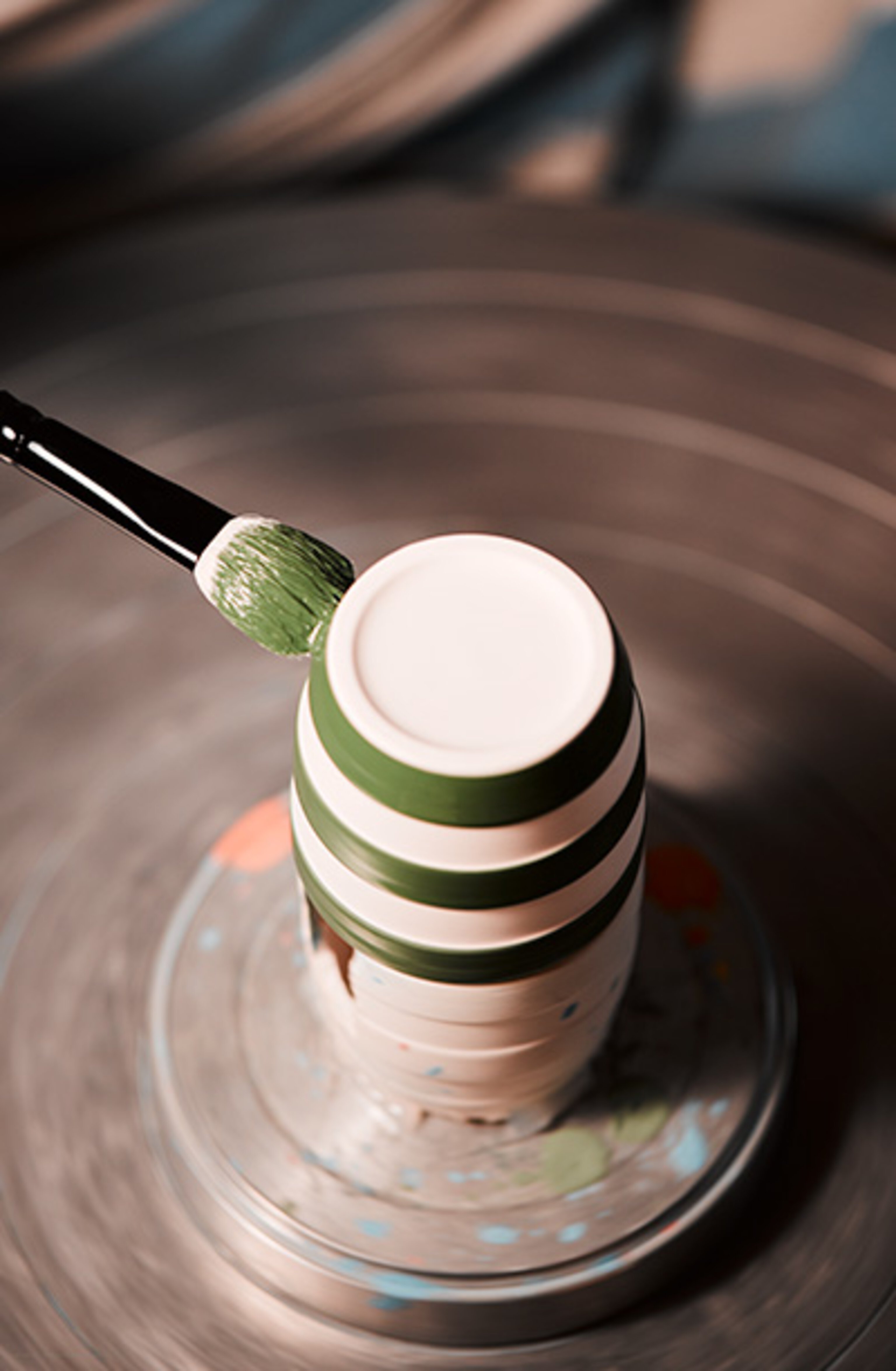
Decorating
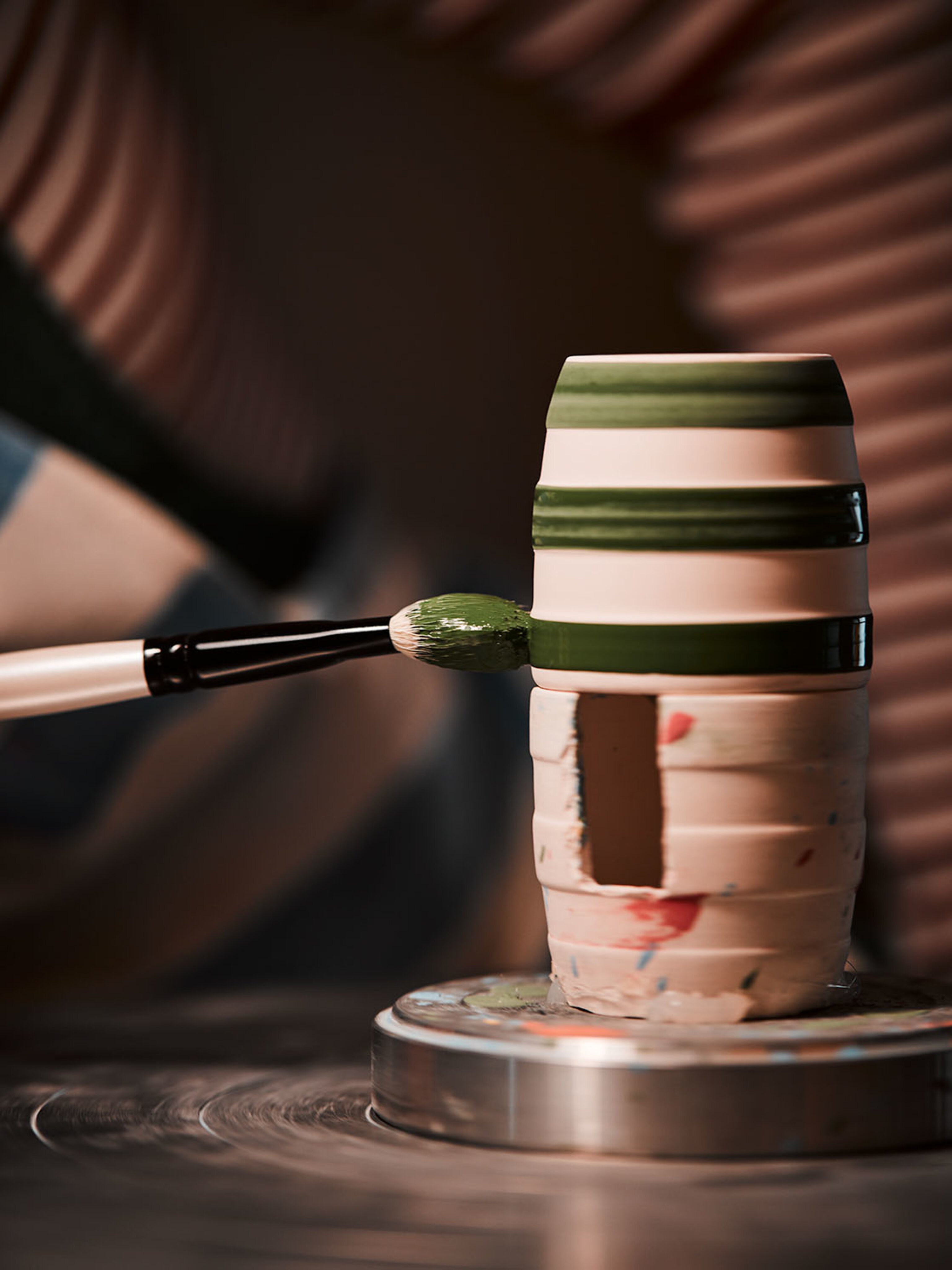
Steady skilled hands paint the stripes in a process called hand banding, which takes three to six months of training.
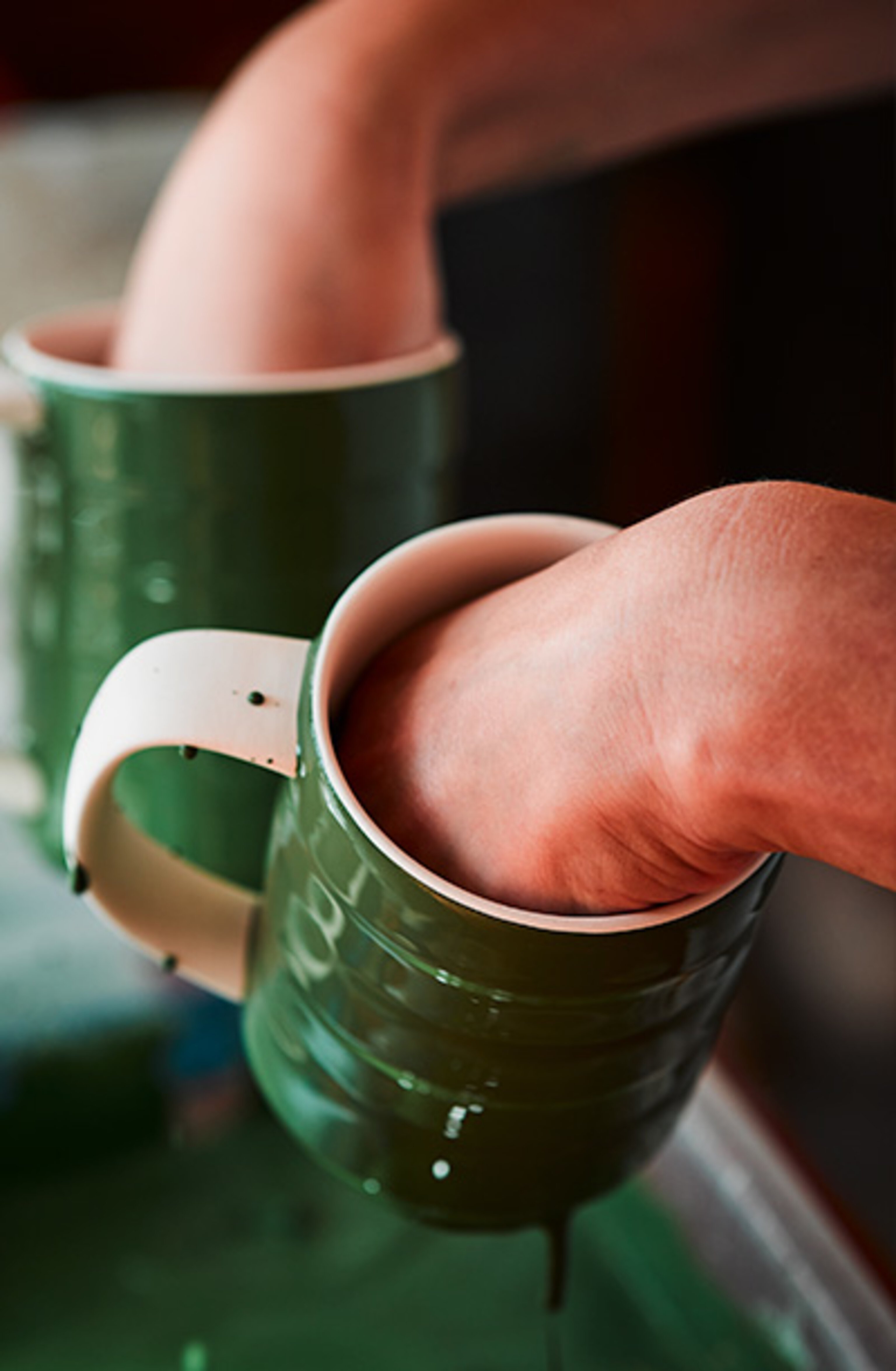
Waxing
Pieces with handles and spouts, which can’t be painted at a wheel, have liquid wax applied to create white stripes when the item is dipped – the paint just slides off those areas…
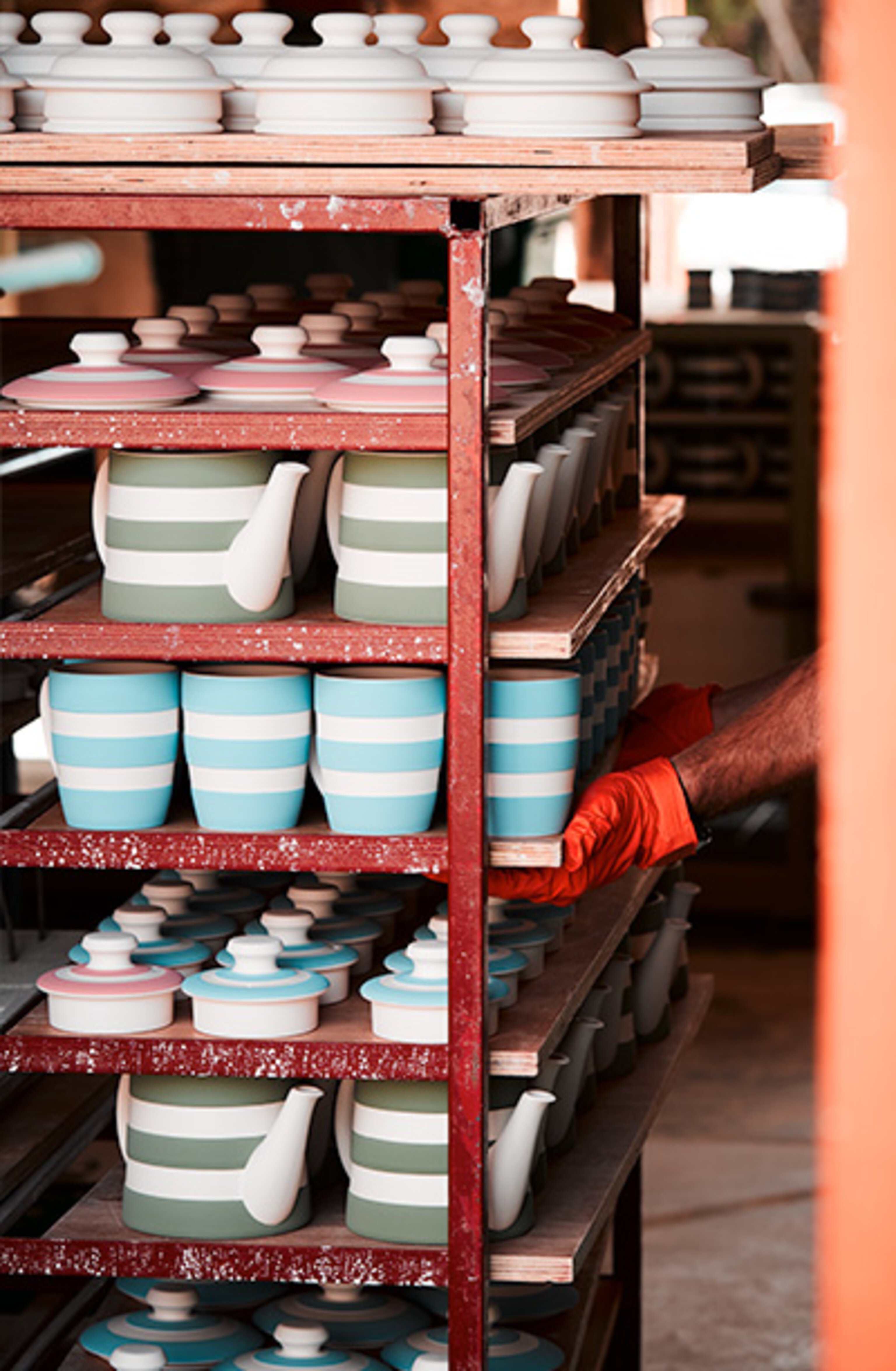
Second Firing
A second visit to the kiln ensures no water is left in the clay so the paint pigments can bond to it.
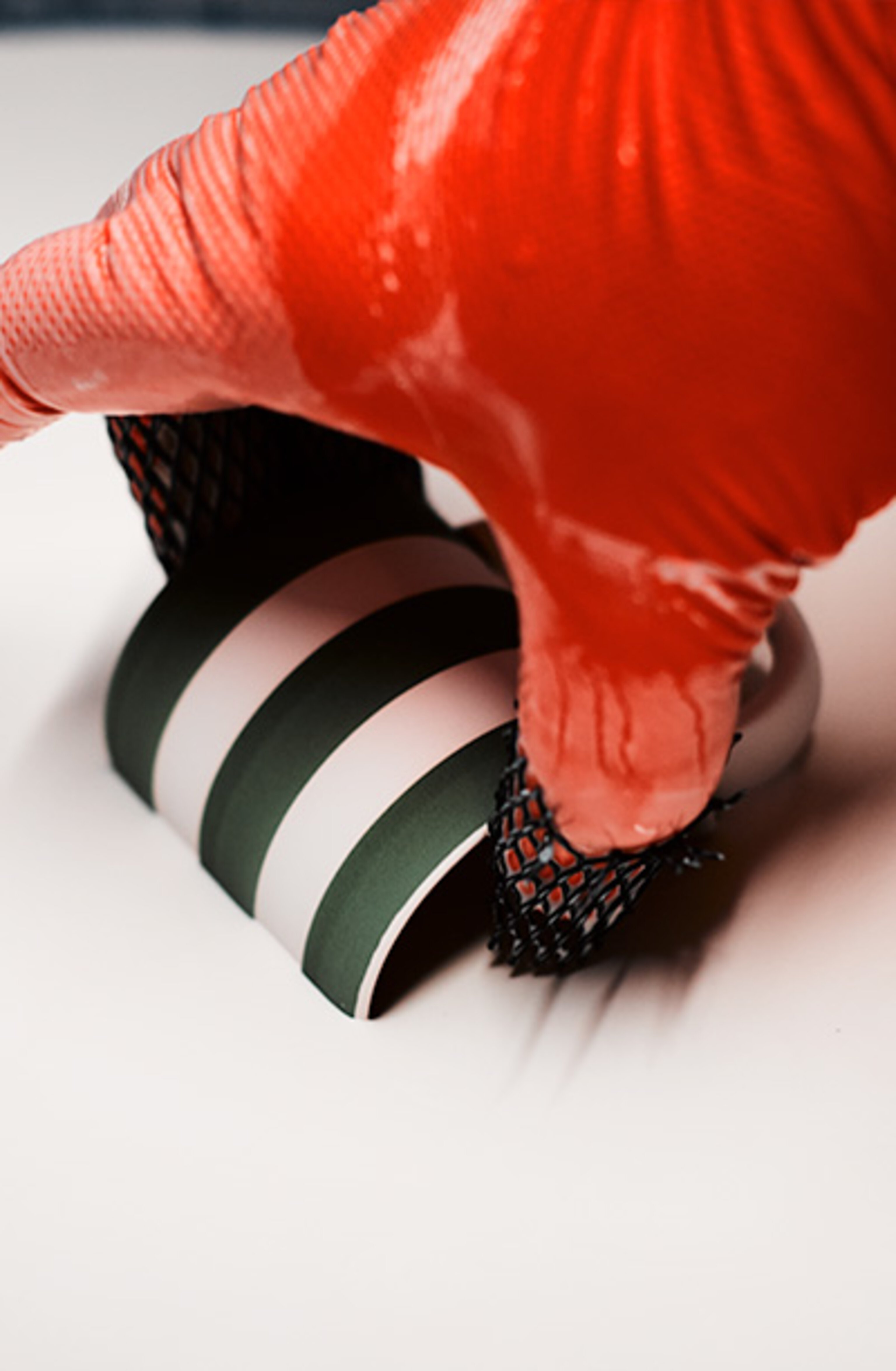
Glazing & Final Firing
Ceramics are dipped in glaze then returned to the kiln for 22 hours. This is where Cornishware gets its shine.
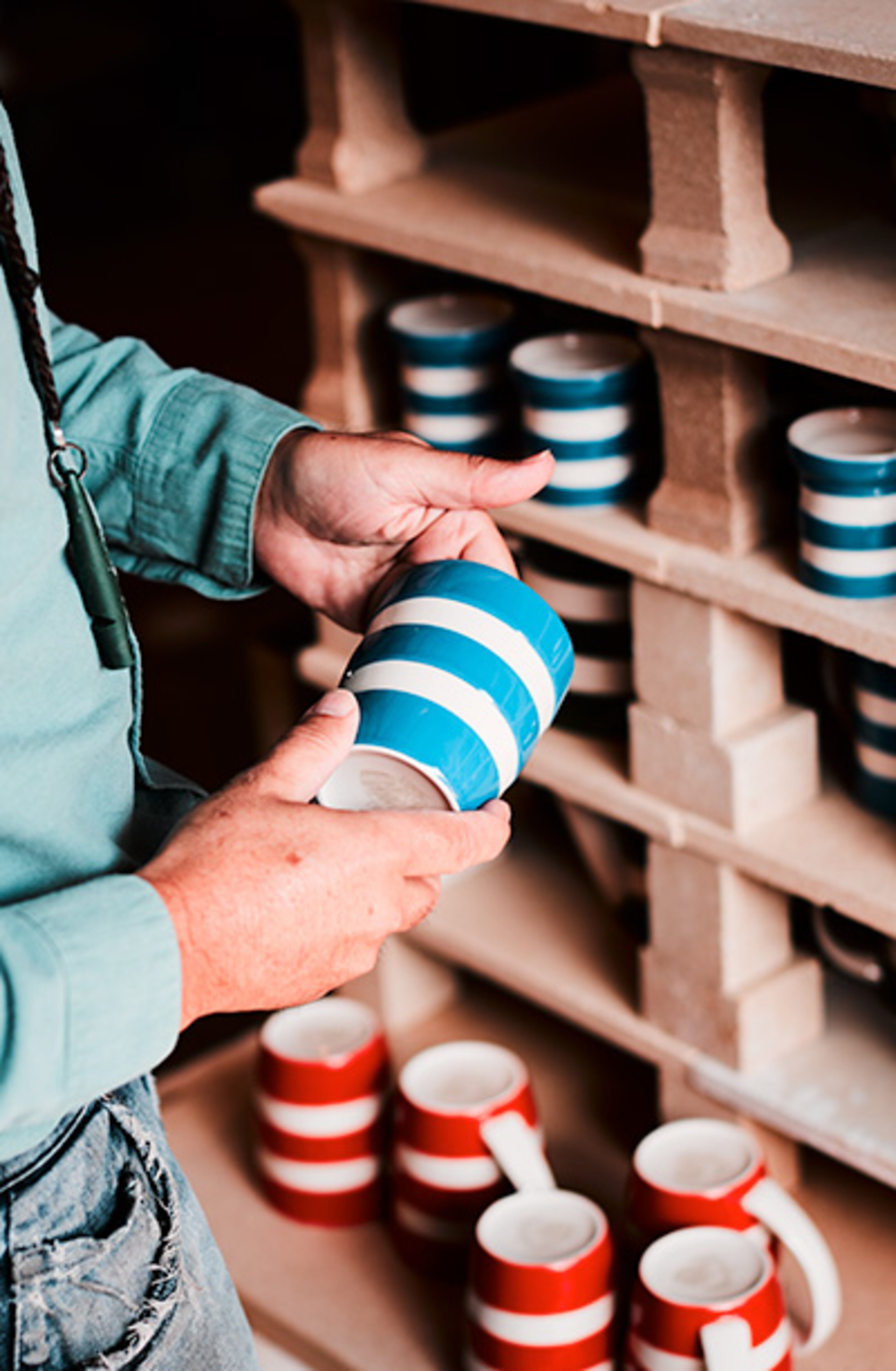
Quality Control
The kiln is opened and each shiny new piece is checked over by Charles Rickards.
“It takes around 14 days to make a cup… each piece passes through 25 pairs of hands” Rebecca Rickards
To the tune of painting wheels turning and the steady hum of the 400-year-old kiln operating in the background, Cornishware’s craftspeople expertly turn out piece after piece. It’s hard to imagine a more peaceful workplace in England. “I’m quite jealous of the ladies in decorating,” says Rebecca. “They listen to audiobooks, going through books and books and books. It’s a lovely calm atmosphere in the pottery.”
Our tour ends at the kiln, where we witness a fresh glistening batch of Harrods Collection crockery emerging from the heat. Once cooled, Charles will inspect the new pieces, as he does most days, even Sundays. It’s a long-held habit – and one made easier by the short 50m commute from his nearby Grade II-listed stone farmhouse.
“I like opening the kiln every morning, it feels like Christmas,” says Charles. “It’s a bit like collecting eggs for me… if you’ve got chickens, that’s [something that’s] very satisfying,”
Over refreshments, the duo warmly recount the moment Harrods buyers got in touch, enquiring about an exclusive range. The relationship has been easy, they say, based on mutual respect and understanding of how both sides do business. And the feeling is reciprocal, with Harrods proud to be partnering with a British brand that values skill, patience and quality, helping to preserve traditional pottery-making for future generations.
“Heritage is the most important thing to this business,” affirms Rebecca. “We view ourselves as guardians.”
Indeed, in over 100 years, Cornishware hasn’t changed its stripes so much as deepened them – this time in Harrods green.
Related Stories
Behind the Harrods Collection: Cashmere
We take a trip to the Scottish factory responsible for some of the world’s finest cashmere – including the new Harrods collection.
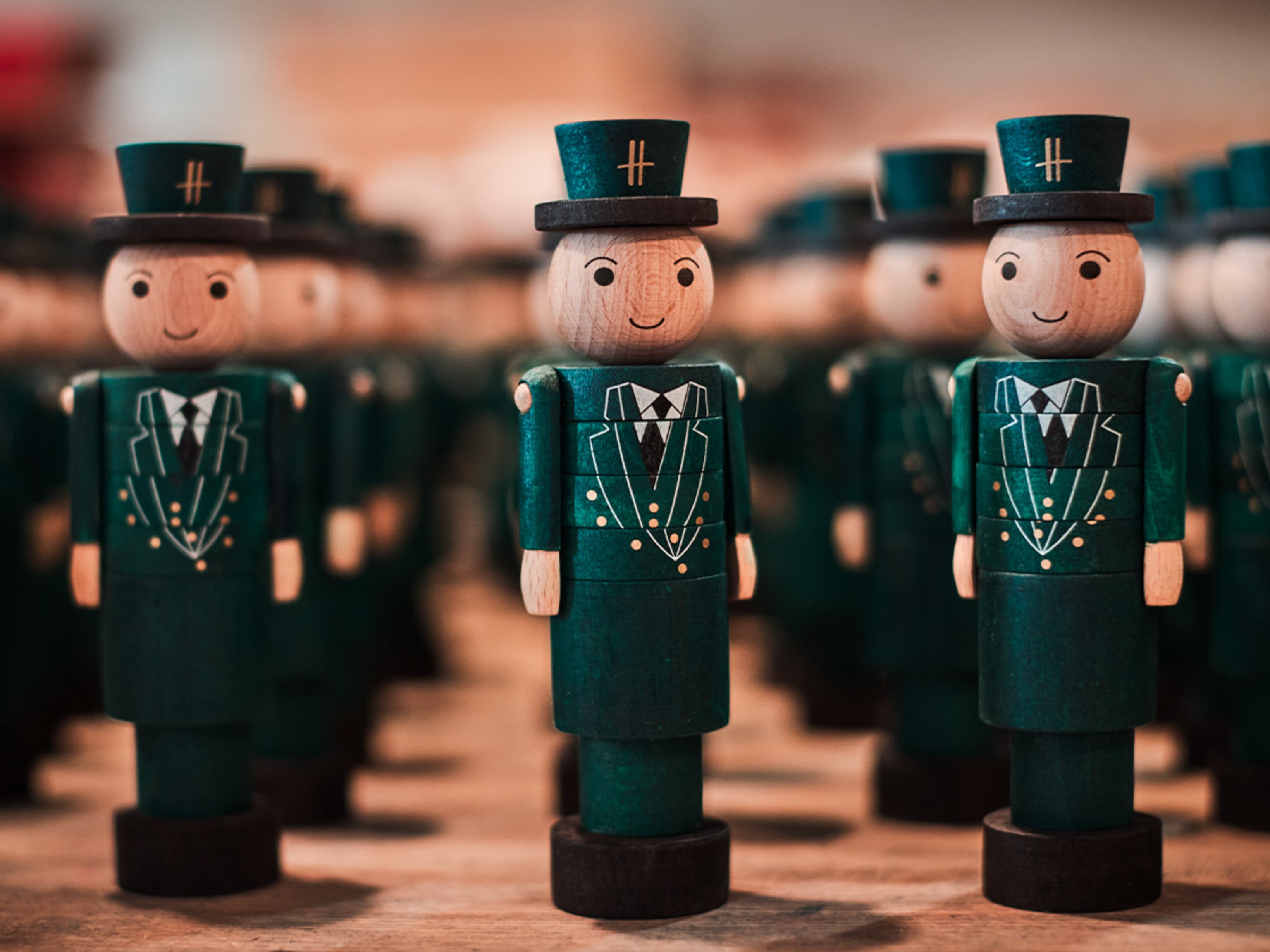
Behind the Harrods Collection: Toys
In a fairy-tale workshop in Poland’s Beskidy Mountains, Wooden Story creates handcrafted toys, now including a collection made exclusively for Harrods.
